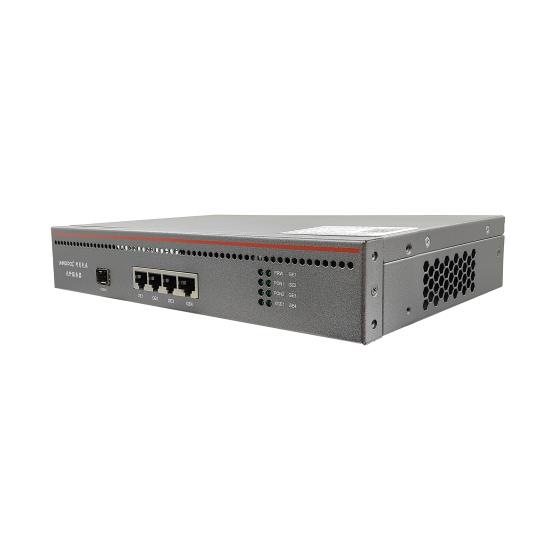
OLT, ONU and Splitter: Understanding FTTH Network Architecture
Key takeaways: A Passive Optical Network has just three core building blocks — the OLT (brain at the central office), the ONU/ONT (subscriber terminal), and the optical splitter (the passive fan-out). Understanding how they share one fiber is the foundation for choosing lean, open, pay-as-you-grow equipment instead of a bulky proprietary chassis.
What Is a PON, and Why Does It Matter?
Most FTTH networks are built on a Passive Optical Network (PON). The word "passive" is the key: between the operator's central office and the subscriber's home, there is no powered equipment — only glass fiber and passive optical splitters. That's what makes PON dramatically cheaper to build and maintain than running a dedicated fiber to every home. A single fiber from the OLT can serve up to 128 subscribers (1:128 split in GPON), cutting transport-fiber cost by an estimated 30–40% versus point-to-point architecture.
The Three Building Blocks
1. OLT — The "Brain" at the Central Office
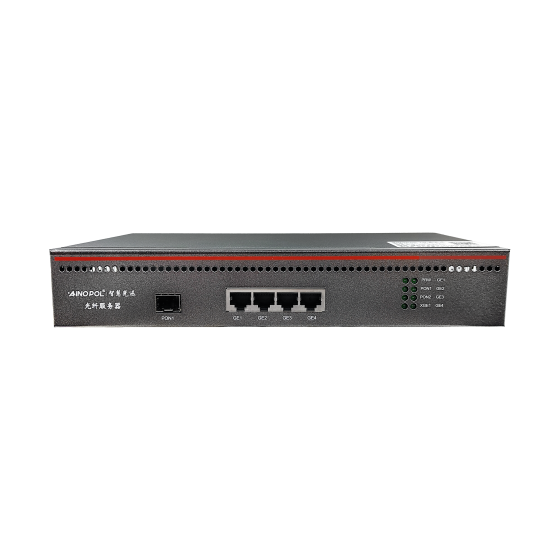
The OLT (Optical Line Terminal) sits in the operator's central office or a street-side cabinet. It's the brain of the network: it pushes data downstream to subscribers, receives their upstream traffic, and handles bandwidth allocation, subscriber management, and security. Crucially, one OLT port talks to many ONUs over a shared fiber tree.
Downstream (OLT → all ONUs): broadcast. Every ONU receives the same optical signal but only keeps the traffic addressed to it (via GEM Port IDs / LLIDs).
Upstream (ONUs → OLT): time-division multiplexing (TDM). The OLT assigns time slots to each ONU so they don't collide on the shared fiber.
2. ONU / ONT — The Subscriber-Side Terminal
The ONU (Optical Network Unit) or ONT (Optical Network Terminal) lives at the subscriber's premises. Its job is optical-to-electrical conversion — turning the light signal into Ethernet, Wi-Fi, telephone, and CATV interfaces your customers actually use. The terms are near-synonyms: ONU comes from the IEEE EPON standard (multi-subscriber / building contexts), while ONT comes from the ITU-T GPON standard (single residential subscriber). In practice, vendors and integrators use them interchangeably.
Common deployment profiles you'll encounter: SFU (single-family, basic conversion only), HGU (home gateway with routing + Wi-Fi + VoIP — what most operators hand out), and MDU (multi-dwelling unit serving several homes from one box in the building's technical room).
3. The Optical Splitter — The Silent Workhorse
The splitter is a passive component that divides one incoming fiber into multiple outgoing branches — 1:2, 1:4, 1:8, 1:16, 1:32, or 1:64 (and up to 1:128 in GPON). It's what lets a single OLT port serve dozens of homes. Splitters come in two deployment styles: single-stage (one 1:64 splitter) or two-stage (e.g., 1:4 then 1:16), the latter being more fiber-saving but adding combined insertion loss.
How the Pieces Connect: The ODN
The ODN (Optical Distribution Network) is the passive transport path linking OLT to ONUs. It has three fiber segments:
- Feeder fiber: OLT → distribution point (longest run, up to ~20 km total reach)
- Distribution fiber: distribution point → access points
- Drop fiber: access point → the ONT in the home
Wavelengths are fixed by the standard: GPON/EPON use 1490 nm downstream and 1310 nm upstream; XGS-PON uses 1577 nm downstream. The ODN is passive and needs no power — which is exactly why PON is so reliable and cheap to operate.
GPON vs XG(S)-PON at a Glance
- GPON (ITU-T G.984): 2.5 Gbps downstream / 1.25 Gbps upstream, shared per PON port, up to 1:128 split
- XG-PON: 10 Gbps downstream / 2.5 Gbps upstream
- XGS-PON: symmetric 10 Gbps / 10 Gbps — ideal for gigabit-plus and business services
For most regional ISPs today, GPON remains the cost-effective workhorse, with XG(S)-PON reserved for high-value or dense business areas.
Why This Matters for Your Equipment Choice
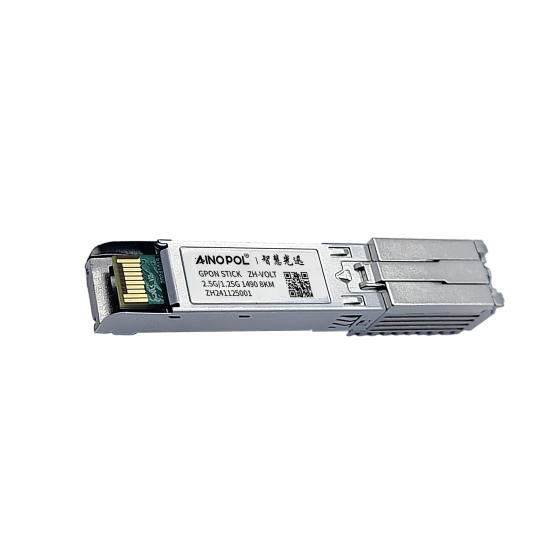
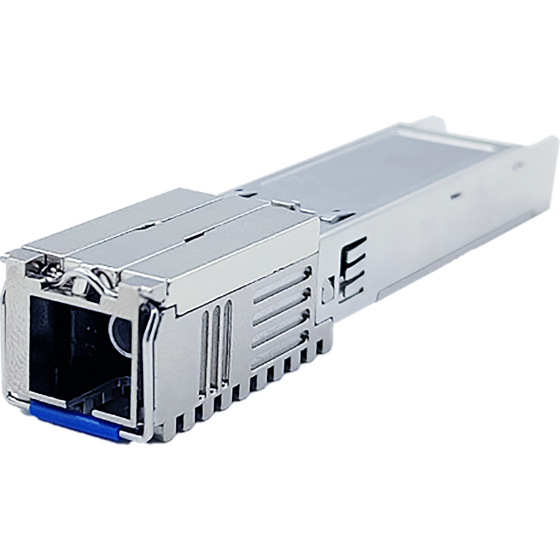
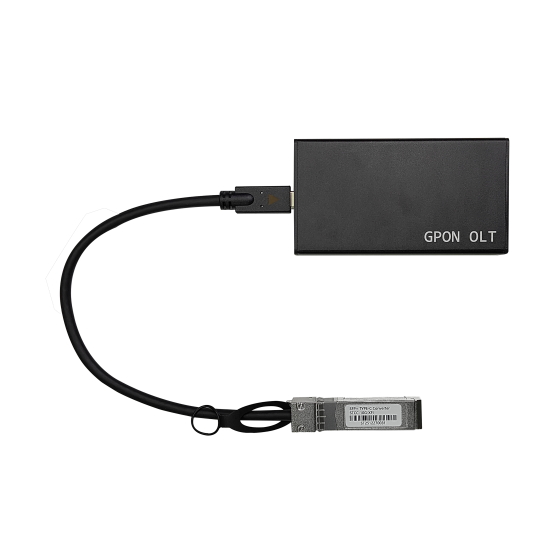
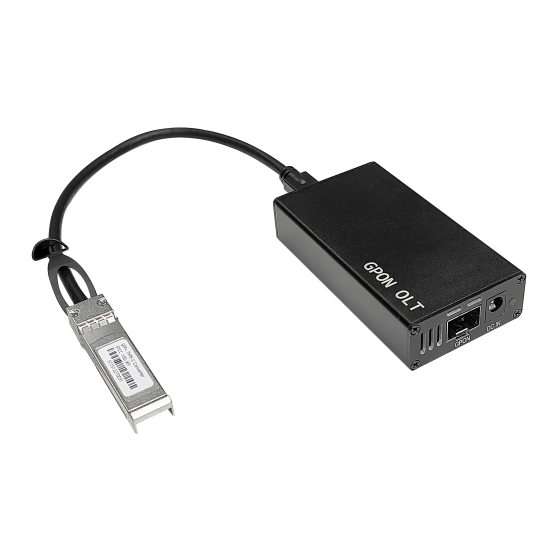
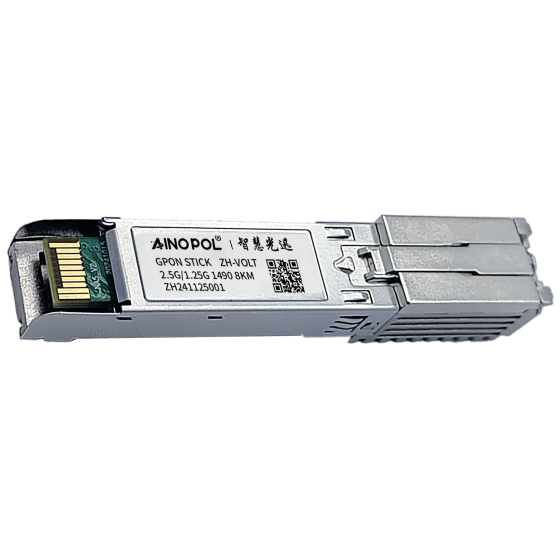
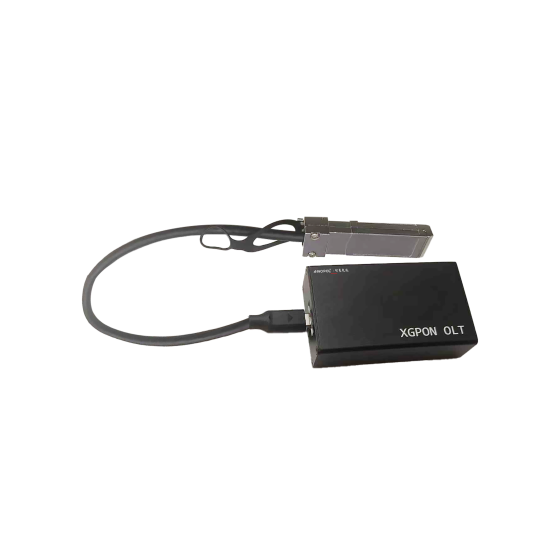
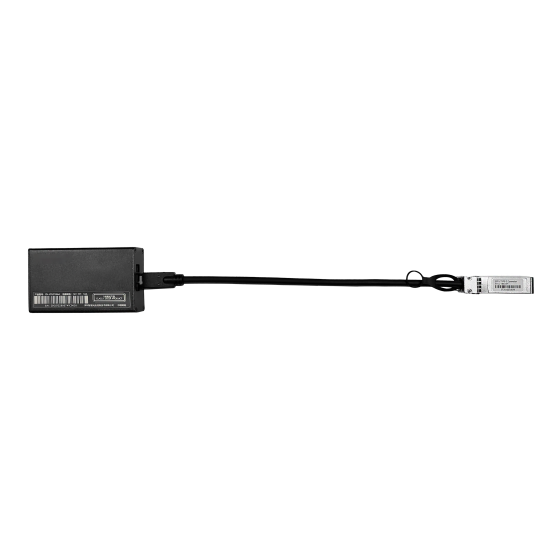
Here's the part traditional vendors don't emphasize: the OLT doesn't have to be a bulky proprietary chassis. Because the PON intelligence lives in the OLT's MAC/PHY and OMCI management layer, it can be packaged into a standard SFP/SFP+ module — a pluggable modular vOLT — that slots into any commercial Ethernet switch. That's the architectural shift behind AINOPOL's ZH-VOLT series:
- ZH-VOLT16 — GPON module, 16 ONUs, SFP, ≤2.5W
- ZH-VOLT32 — GPON module, 32 ONUs, SFP, ≤2.5W
- ZH-VOLT64 — GPON module, 64 ONUs, SFP, ≤2.5W
- ZH-VOLTXG64 — XG-PON module, 64 ONUs, SFP+, ≤5W
Same PON architecture your engineers already know — just deployed the lean, pay-as-you-grow way, with 95%+ ONU compatibility and cloud-based EAAS management.
The Bottom Line
Understanding OLT, ONU, and the splitter isn't just trivia — it's the foundation for making smart procurement and architecture decisions. Once you see that the OLT is just one module in a passive tree, the old "buy a big chassis" assumption starts to look optional. Build the network your subscribers need, not the one the legacy catalog insists on.
Sources: ElectricalVolt "What is OLT, ODN, ONU, ONT in FTTH"; Elfcam PON architecture guides; DimiFiber "How to Build an FTTH Network"; CytxFiber FTTH key technology analysis. Vendor split-ratio and cost figures are industry-standard references, not product-specific benchmarks.
Contact Us
Designing your FTTH architecture and want a second opinion on the OLT layer? Send us your split ratio and target subscriber count — we'll map it to a modular ZH-VOLT plan with a free compatibility check:
- Email: zhenghui.xu@sczhgx.com
- WhatsApp: +86 17612849559