Campus Fiber Network Guide: Using PON for Office, Security and IoT Services
1. Why campuses are moving toward fiber networks
Modern campuses need one reliable infrastructure for office access, video surveillance, access control, voice, wireless services and IoT applications. Fiber provides long transmission distance, strong resistance to interference and generous bandwidth headroom, making it suitable for a scalable campus network.
2. Basic PON campus architecture
A PON campus network is built around the OLT, ODN and ONU. The OLT is placed in the core room, the ODN includes fiber cables, splitters and distribution frames, and ONUs are installed in buildings, offices, surveillance areas and IoT locations.
The recommended structure is core room, campus backbone, building access and business terminals. Different services should be separated logically through VLANs, bandwidth policies and access permissions.
3. Split ratio and optical budget
A higher split ratio is not always better. Fiber distance, splitter levels, connectors, splices and equipment specifications all affect the available optical margin. Plan the longest and most complex path first, then determine the split arrangement and PON ports.
- Calculate fiber distance and splice loss for the farthest endpoint.
- Plan dense buildings and dispersed outdoor endpoints separately.
- Reserve fiber cores and ports for future cameras, buildings and IoT devices.
- Keep accurate port labels, fiber numbers and route records.
4. Carrying office, security and IoT services
Office access focuses on stability and concurrency, surveillance requires continuous upstream bandwidth, while access control and sensors require long-term availability. Check camera bit rates, storage paths, wireless backhaul, IoT protocols and terminal compatibility before deployment.
5. Equipment selection and operation
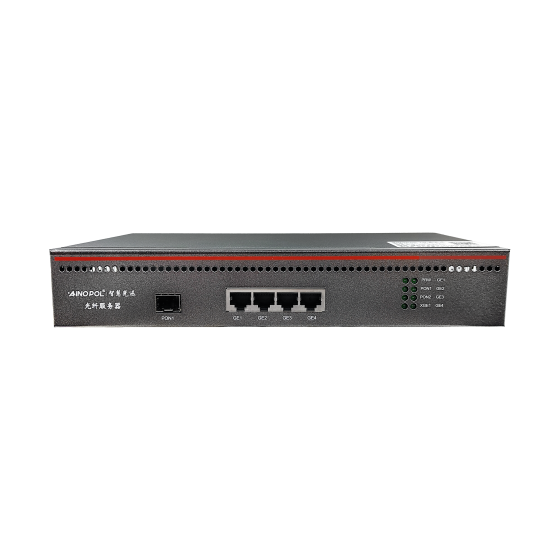
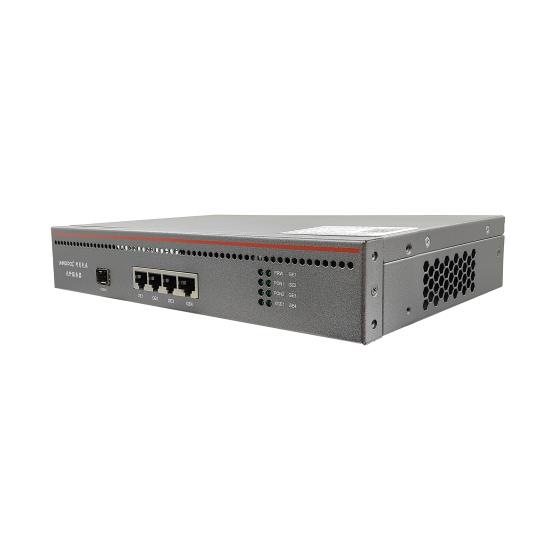
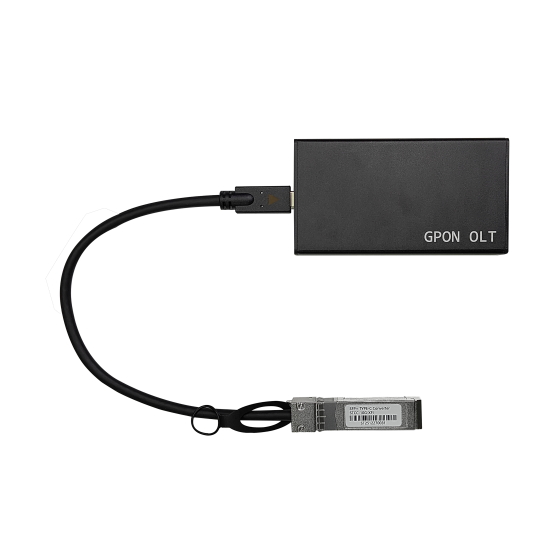
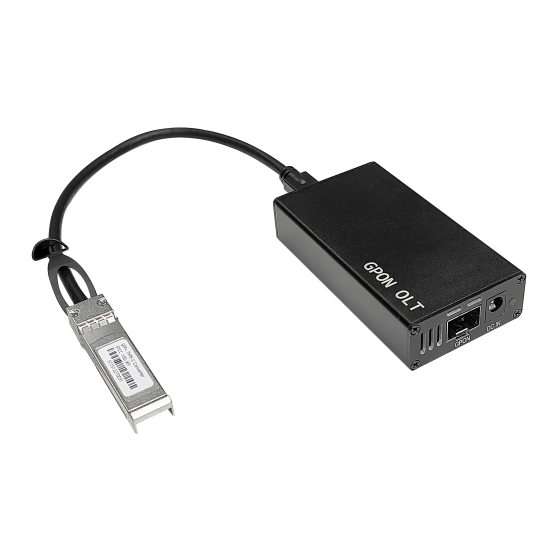
Select the OLT according to campus size, user count, PON standard, uplink bandwidth and expansion needs. ONU selection should consider interfaces, PoE support, management functions and compatibility. A complete asset register should record OLT ports, splitter ports, fiber cores, ONU locations and services.
6. Implementation and acceptance
Before construction, complete route surveys, cabinet confirmation, fiber capacity calculations and endpoint lists. During acceptance, check optical power, connectivity, service isolation and peak-load performance. Keep topology drawings, port maps, test reports, configuration backups and maintenance contacts.
Conclusion
A campus fiber network is more than replacing copper with fiber. With sound PON planning, optical budgeting, service isolation and complete documentation, one infrastructure can support office, surveillance and IoT services while remaining stable and easy to expand.
Contact AinOPOL
For FTTH installation, PON expansion, or equipment selection, contact AinOPOL:
- Email: zhenghui.xu@sczhgx.com
- WhatsApp: +86 17612849559
- Store: shop.sczhgx.com