



New lightweight network scheme: OLT STICK
New lightweight network scheme: OLT STICK
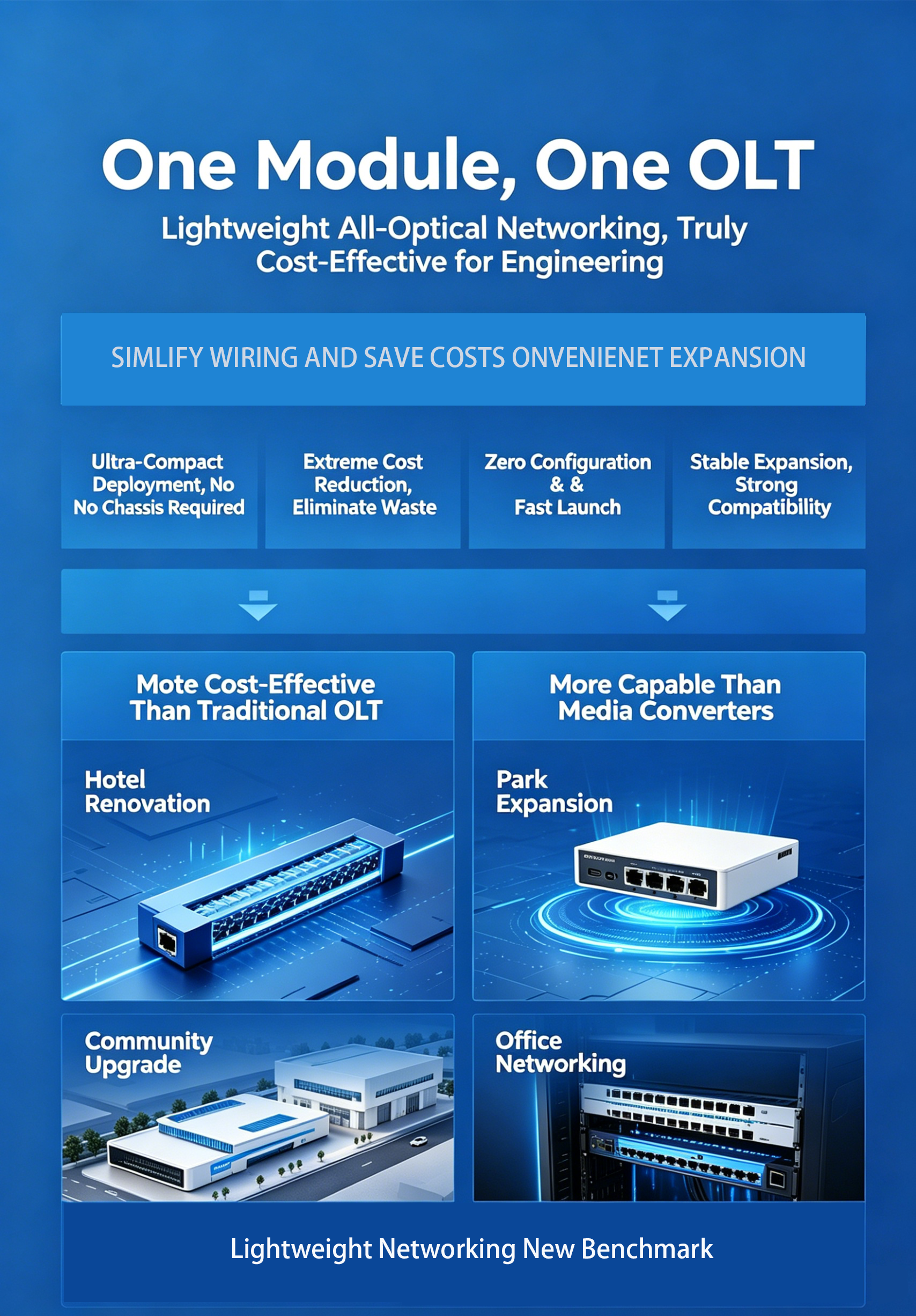
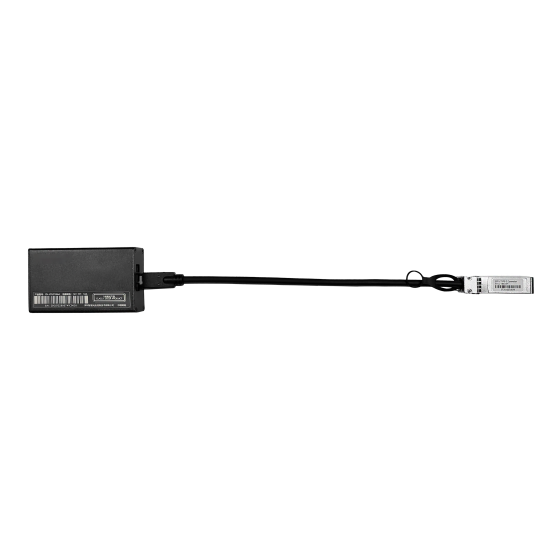
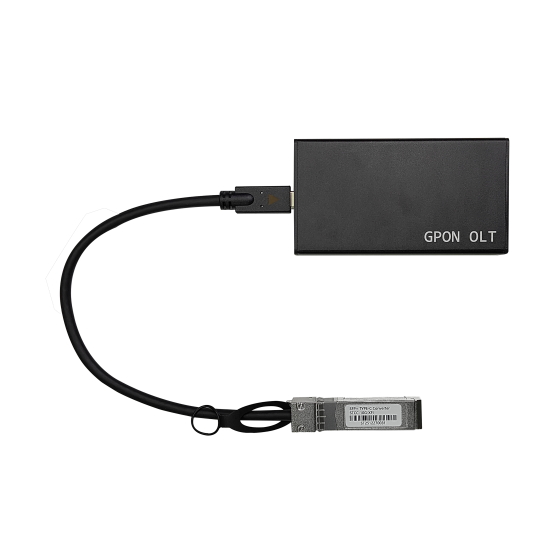
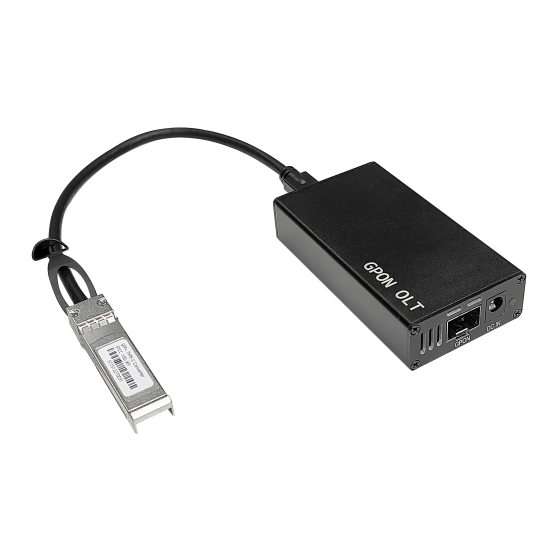
Traditional rack-type OLT equipment is large in size, high in cost and cumbersome in deployment. It is only suitable for large-scale and high-density batch network scenarios. In lightweight projects such as small parks, shops, hotel transformation, temporary networking, point expansion, etc., there are serious problems of resource redundancy and low cost performance. As a new generation of micro-integrated optical network terminal module, the OLT STICK module completely breaks the morphological limitations of traditional OLT equipment, and realizes the transformation of ordinary switch/router optical port to standard OLT optical port with low cost, zero equipment and light weight, which replaces the traditional OLT and adapts to small and medium-sized PON. The revolutionary plan of network formation.
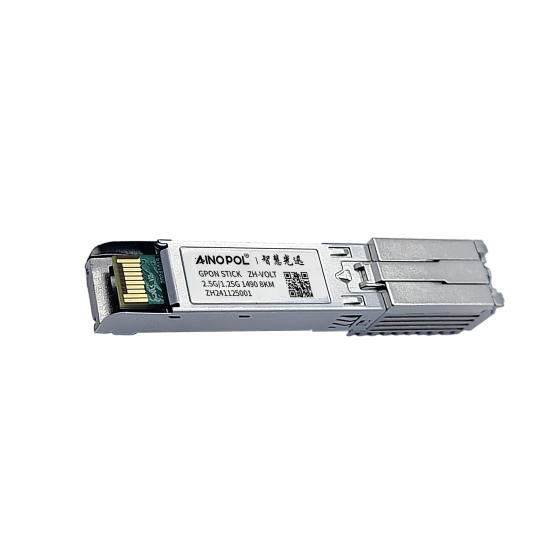
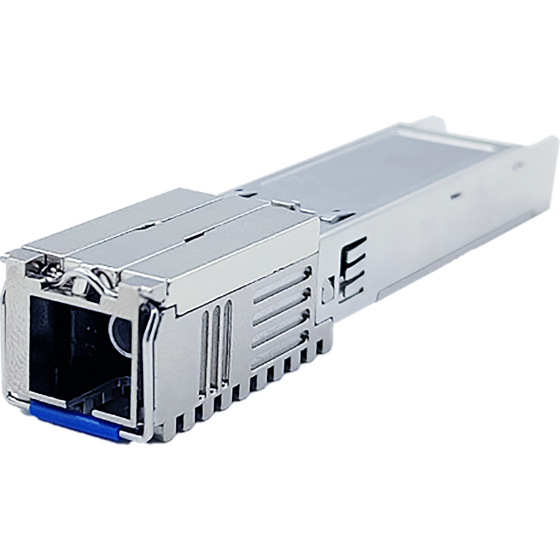
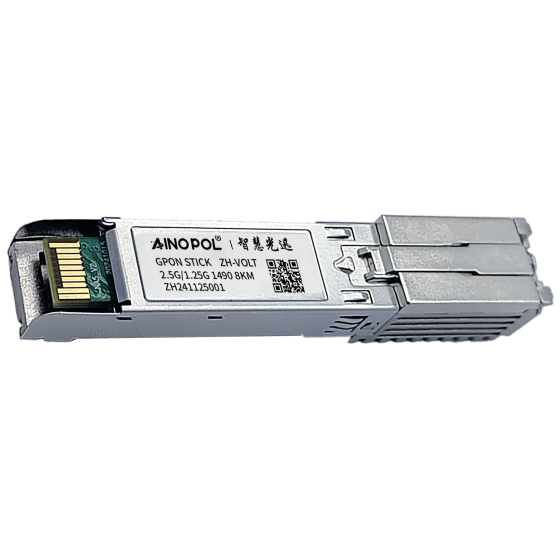
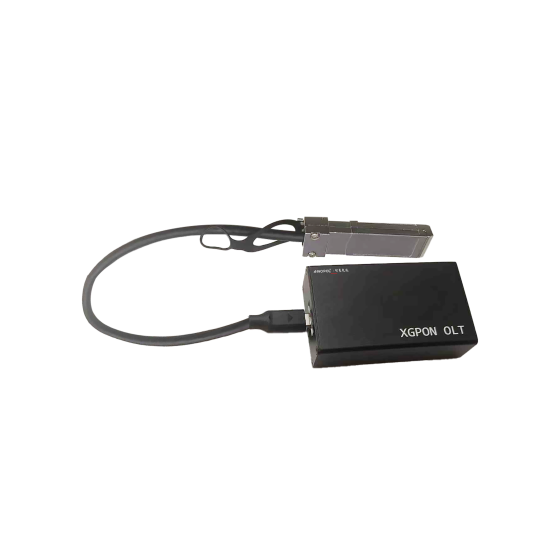
1. Product core definition OLT STICK adopts the standard SFP/SFP+ pluggable packaging form, which is a miniature optical module that integrates complete OLT core functions. It concentrates the main control chip, PON signal processing, photoelectric conversion, bandwidth scheduling, terminal registration management and other functions of the traditional rack-type OLT into one small module. No independent OLT host, cabinet deployment, additional power supply and heat dissipation equipment are required, and directly plugged into the switch and router idle light port. It can quickly generate standard GPON/XGS-PON station optical ports, which is perfectly compatible with all kinds of conventional ONU terminals and splitter devices.
2. Core advantages: realize the low-cost transformation of optical port to OLT. Minimalist form, zero equipment deployment: abandon bulky rack-type OLT equipment, only one pluggable module can realize complete OLT functions, save cabinet space, reduce wiring, and adapt to weak electrical boxes, small computer rooms, and space-limited scenario deployment. Extreme cost reduction, say goodbye to resource redundancy: There is no need to purchase whole machine OLT equipment, and a standard PON network can be built with only the module cost, which completely solves the pain points of small projects, high cost of scattered network equipment and waste of resources, and greatly reduces project investment. Plug-and-play, fast online: supports no complex configuration, automatic registration, zero interference for business transmission, plug-in the device to run, no need for professional debugging, greatly shorten the network construction cycle, and adapt to the needs of rapid capacity expansion and temporary network. Fully compatible and adaptable, extremely versatile: compatible with mainstream 1.25G/10G upstream and 2.5G/10G downstream bandwidth, adapting to all standard GPON ONU terminals and optical fiber splitters, which can perfectly benefit the old original optical fiber wiring and terminal equipment, and zero threshold for old network transformation. Stable and reliable, engineering-level adaptation: inheriting the advantages of professional PON network transmission, supporting multi-device concurrency, bandwidth intelligent scheduling, optical path detection, 7×24-hour stable operation, compared with transceiver point-to-point network, it supports optical multi-level network, which is more expandable.
3. OLT STICK compares the advantages of traditional networking. Compared with the "traditional whole machine OLT+ONU" network: OLT STICK does not require whole machine equipment, cabinet, lower cost, faster deployment, adapts to small lightweight projects, and avoids large materials and small use. Compared with the "OLT module + transceiver" network: OLT STICK supports PON optical network. One module can bring multiple ONU terminals without one-to-one point-to-point docking. The port utilization rate is higher and the network is more expandable, which is suitable for multi-terminal centralized access scenarios.
4. Core landing application scenario Small and medium-sized hotels/apartments all-light transformation: guest room points are concentrated, the number is moderate, OLT STICK is used to replace the whole machine OLT, and the whole house PON optical network is built at a low cost, simple operation and maintenance, and the network is stable. Expansion of the edge of the park/factory area: There is no need to add OLT equipment to the core computer room. Insert the STICK module to expand the PON optical port and quickly cover the edge buildings and scattered points. Lightweight transformation of old communities: benefit from the old original optical fiber lines and ONU terminals, no need to replace equipment, complete network upgrades at low cost, higher bandwidth and stronger stability. Temporary network/project pilot: exhibition, construction site, temporary office network, plug-and-play, can be disassembled and reused at any time, full of flexibility, far more cost-effective than the traditional network scheme. Small and micro enterprises/shop network: small volume, few terminal scenarios, no need to invest in the whole machine OLT, one module can achieve high-speed and stable all-optral network. Five. Deployment practice key points
1. Insert the OLT STICK module directly into the switch and router standard SFP/SFP+ optical port, and the device automatically identifies and adapts;
2. The back-end is equipped with 1 point 4, 1 point 8 optical splitter, which can bring multiple ONU terminals at the same time to realize multi-point centralized access;
3. The whole process With the original optical fiber wiring, there is no need to change the line or debug, and the terminal registration can be completed when the power is on;
4. Adapt to gigabit/ten thousand gigabit bandwidth, which can be matched with various services such as home broadband, office Internet access, monitoring and transmission as needed. IX. Summary of the final version of the plan. Overall, the traditional "OLT optical module + optical fiber transceiver" point-to-point network is suitable for long-distance and fragmented single-point extension; while the OLT STICK micro-module network focuses on low-cost, lightweight, multi-terminal centralized access, perfectly filling the market gap of small PON network. White. The two schemes complement each other and can be flexibly matched according to the project scale, the number of points and budget needs, covering the full-scene needs of large-scale projects, small and medium-sized transformations, edge capacity expansion, temporary networks, etc. It is the best combination plan for the current lightweight landing, cost reduction and efficiency of gigabit optical network.