


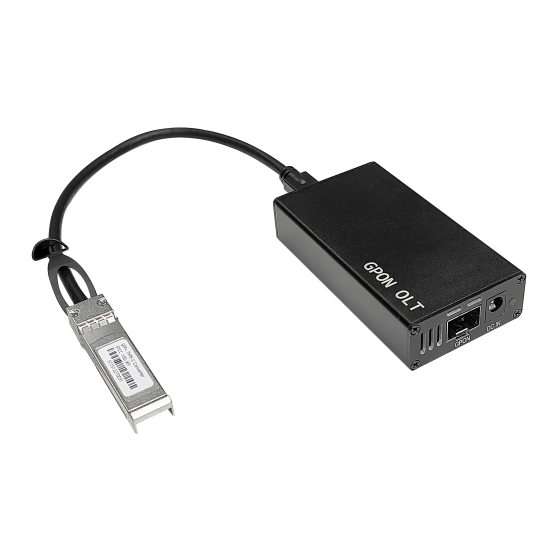
Putting an OLT into an SFP Optical Module? A New Approach to All-Optical Network Access
Author:
Release time: 2026-05-18 11:53:11
View number: 77
Putting an OLT into an SFP Optical Module? A New Approach to All-Optical Network Access
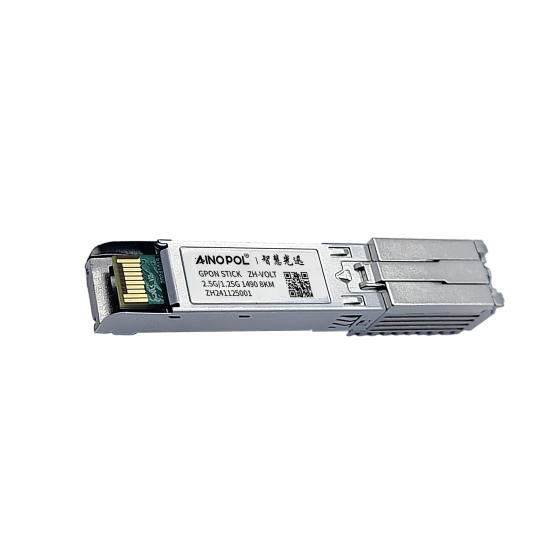
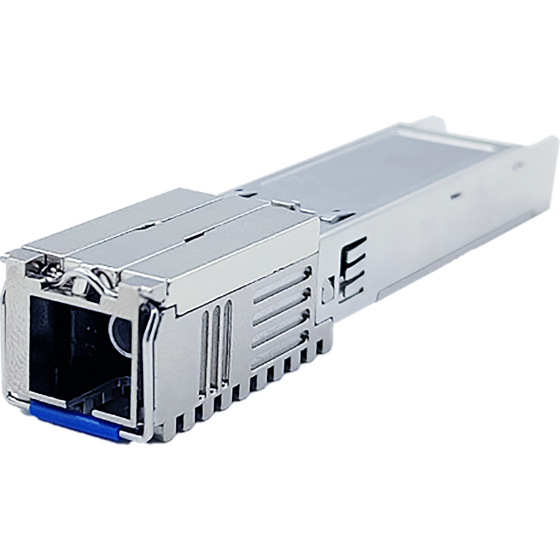
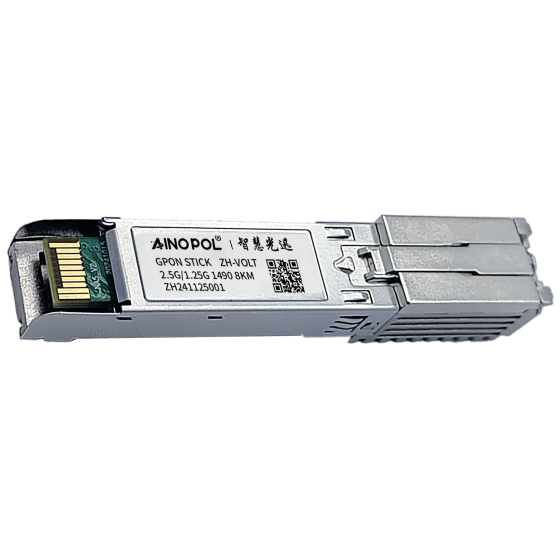
Traditional optical line terminal (OLT) deployment for passive optical networks (PON) has long been constrained by multi-layer proprietary protocol switches and dedicated chip-based networking architectures, resulting in high network complexity and construction costs. By reconstructing the underlying PON architecture, AINOPOL has developed the world’s first pluggable OLT — the ZH-VOLT series. This product series integrates all PON MAC and PHY layer functions into a standard SFP+-packaged pluggable optical transceiver, completely separating the PON domain from the switching domain, eliminating proprietary switching layers, and enabling modular elastic scaling, cloud-based virtualization management, design-level interoperability, and open management APIs. This whitepaper elaborates on the six core design principles and technical advantages of the ZH-VOLT series, offering a simpler, lower-cost, and more scalable fiber access network solution for mass commercial fiber networks.
Introduction
The global broadband access market continues to see growing demand for fiber-optic networks, yet traditional OLT deployment remains complex and costly. When building PON networks for the mass commercial market, operators typically must purchase dedicated rack-mounted OLT equipment containing multi-layer proprietary switching chips and PON-specific chip sets. This architecture not only limits service flexibility but also makes expansion, upgrades, and maintenance highly dependent on a single equipment vendor.
AINOPOL believes that the engineering practicality of PON technology should return to simplicity. By atomizing and modularizing PON functions and decoupling them from the Ethernet switching domain, the deployment complexity and construction costs of mass commercial fiber networks can be significantly reduced. The ZH-VOLT series is the embodiment of this philosophy.
I. Industry Challenges and Traditional Dilemmas
The core problems of the traditional OLT access architecture focus on four dimensions:
- Multi-layer architecture: Traditional PON deployment involves complex multi-layer structures including BRAS, switches, and OLTs, with lengthy network links and complicated logic, making simple optical gateway design unachievable.
- Proprietary protocol barriers: Heavy reliance on vendor-proprietary protocols and dedicated chips results in closed network architectures lacking interoperability, flexibility, and openness.
- High deployment costs: Exorbitant equipment procurement costs, coupled with complex software-hardware integrated architectures, drastically increase labor and time costs for on-site installation, commissioning, testing, and later operation and maintenance (O&M).
- Vendor lock-in: Operators and enterprises are deeply bound to specific vendors’ software and hardware ecosystems, unable to independently and flexibly select technologies and equipment, severely restricting service innovation capabilities.
Centered on a standard SFP/SFP+ package + open decoupled design, the ZH-VOLT series offers two product forms: modular and Online, comprehensively solving the pain points of traditional OLTs.
表格
| Dimension | ZH-VOLT Series Pluggable OLT | Traditional OLT |
|---|---|---|
| Architecture | Single-layer Ethernet, open and decoupled | Multi-layer proprietary switching, complex and closed |
| Hardware | SFP+ pluggable, plug-and-play | Dedicated chassis + boards, bulky and expensive |
| Scaling | Port-level, on-demand elastic scaling | Board-level, high rigid investment |
| Management | Hardware-independent, mainly cloud-based | Hardware-bound, mainly local |
| Open Management API | Supported | Not supported |
| Interoperability | Native OMCI, multi-vendor compatible | Vendor-bound, difficult interoperability |
| Cost | High construction/O&M/expansion costs | Low cost |
II. World’s First Pluggable vOLT
The core innovation of the ZH-VOLT series lies in revolutionizing the PON access layer architecture through three design concepts:
- Complete separation: Thoroughly separate the PON domain from the switching domain, breaking the deep coupling of traditional architectures to achieve architectural decoupling and functional independence.
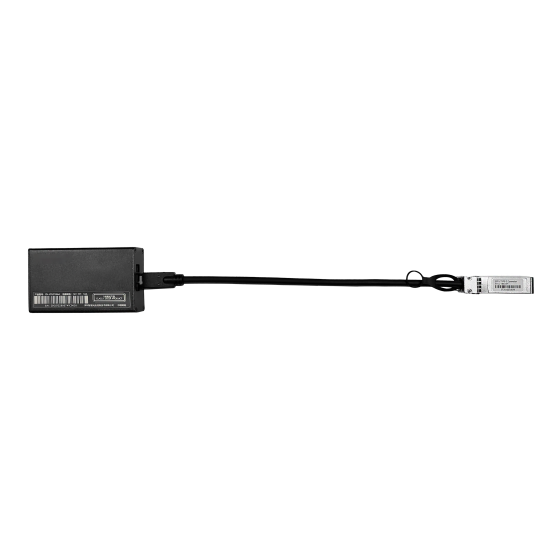
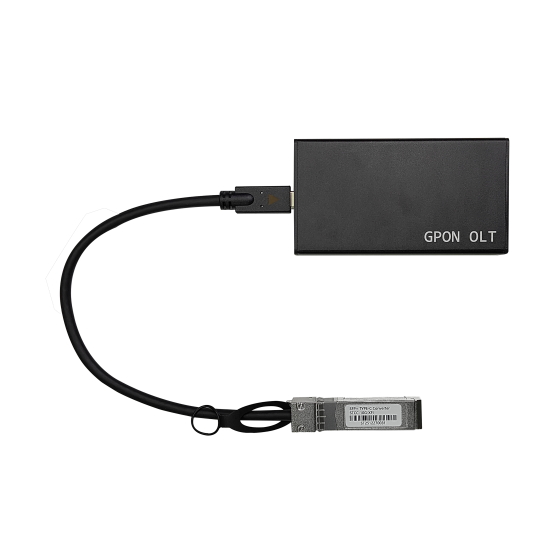
- High integration: Integrate all media access control (MAC) and physical (PHY) layer functions of Gigabit/2.5G PON into a standard-compliant SFP pluggable optical transceiver module.
- Independent operation: All core PON functions (such as DBA, FEC, SAR, encryption, etc.) are managed internally by the module itself, without relying on the host CPU, realizing true plug-and-play.
III. Five Core Architectural Design Principles
1. Complete Separation of PON Domain and Switching Domain
- Functional integration: The ZH-VOLT32 integrates multiple core functions including Ethernet-to-PON frame processing, DBA, FEC, SAR, PON encryption, and OLT management command processing within the module.
- Core chip: Uses AINOPOL’s self-developed FPGA chip dedicated to Ethernet-to-2.5G PON MAC bridging (ZH-VOLT32 bridging chip), ensuring independent and controllable architecture.
- High-performance processing: Inter-domain frame processing and PON traffic scheduling are completed at line speed on the dedicated chip, eliminating software processing bottlenecks and ensuring high system performance and efficiency.
- Final achievement: Through in-depth software-hardware integration optimization, it has successfully created the world’s smallest and lower total cost GPON OLT, greatly lowering operators’ deployment thresholds and optical gateway design complexity.
2. Elimination of Proprietary Switching Layers
- Breaking lock-in: Traditional OLTs embed the MAC layer in the proprietary switching domain, leading to service limitations and vendor lock-in, making architectural upgrades urgent.
- Open compatibility: The ZH-VOLT32 can directly connect to mainstream commercial Gigabit/2.5G Ethernet switches, routers, firewalls, and other standard equipment.
- Independent selection: Operators/enterprises can independently choose industry-leading Ethernet solutions best suited to their service scenarios and directly reuse existing mature equipment.
- Rapid deployment: The device supports plug-and-play without additional adaptation or development, shortening service launch cycles from weeks to hours.
3. Modular Elastic Scaling
- Port-based scaling: Elastic scaling port by port in any switch networking environment, avoiding blind redundant investment and precisely matching initial network construction needs.
- Switch-based scaling: Supporting flexible networking from entry-level to ultra-large scale with the same OLT solution, ranging from a 1-port media converter to a 48-port high-density switch.
- Multi-gateway scaling: Upgrading optical-port-equipped routers and firewalls into PON-port-equipped optical gateways, secure optical gateways, and multi-service optical gateways.
- Management-based scaling: Supporting a lightweight pure cloud management architecture, fully compatible with emerging industry architectures such as SDN and open-source management, protecting future management system investments.
4. Virtualized Cloud Management Architecture Deployment
- Pure software management: Integrating all PON-specific MAC and PHY layer hardware functions into the module, enabling fully software-based PON management.
- Flexible deployment: The management system can be deployed on commercial general-purpose servers, compatible with SDN architectures, and flexibly deployed anywhere in the operator’s network.
- Intelligent chip: The built-in FPGA chip of the ZH-VOLT32 integrates an embedded CPU, efficiently processing various OLT management commands to ensure performance and stability.
- Standard interfaces: Management commands are issued via standard Layer 2 Ethernet frames, supporting Web UI, Netconf/YANG, full switch adaptation, and SDN/open-source architectures.
5. Design-Level Interoperability
Taking interoperability between OLT and ONT/ONU as the core goal of architectural design to build an unobstructed connection foundation.
- Native interoperability design: Directly completing MAC header conversion between the Ethernet MAC domain and PON MAC domain, realizing native interoperability at the underlying layer and greatly reducing adaptation costs.
- Standard protocol support: The FPGA chip embeds the OMCI standard protocol stack, fully supporting plug-and-play of standard ONU/ONT equipment from major mainstream vendors in the market.
- Eliminating interoperability barriers: Completely avoiding equipment binding and interoperability barriers caused by vendor proprietary protocols in traditional solutions, effectively reducing network construction and O&M costs. Currently, the HGU compatibility rate is approximately 95%, with plug-and-play for mainstream brands; vendor support is available for incompatible devices, and third-party ONUs and optical port devices are also supported.
IV. Dual Form Factors for Diverse Applications
We have launched two major product lines — Modular and Online — in the form of SFP pluggable modules and compact standalone devices, precisely covering all scenarios from small-scale supplementary coverage to large campus networks:
Modular Product Line | Ultra-Integrated Solution
- Core form: SFP pluggable module, seamlessly compatible with standard optical-port data communications equipment.
- Product features: Ultra-compact, plug-and-play, highly condensing OLT functions into a small size, perfectly suitable for high-density network scenarios with strict limits on deployment costs and physical space.
- Technical standard: GPON (ITU-T G.984)
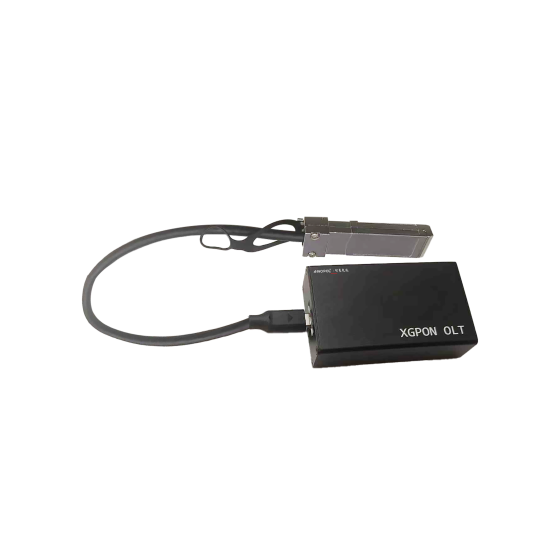
Online Product Line | Full-Scenario Standalone Deployment
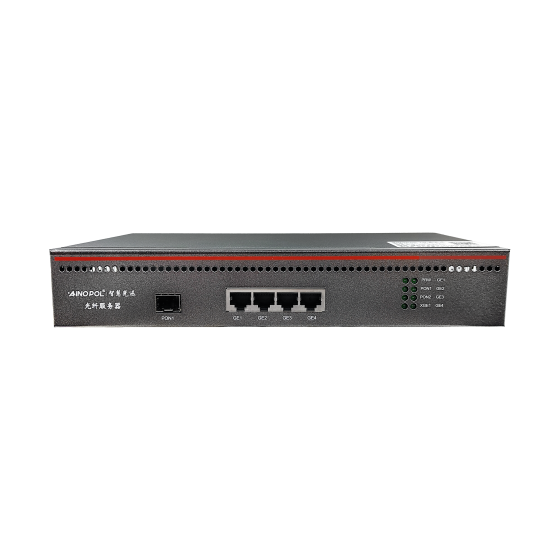
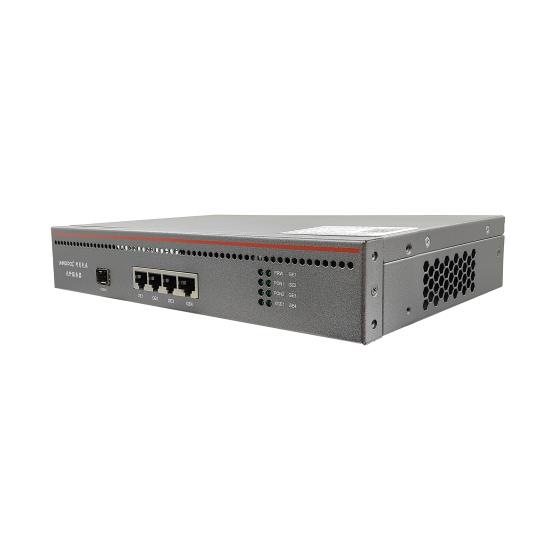
- Core form: Compact standalone hardware device providing complete system functions and interfaces.
- Product features: High integration and rich physical interfaces, supporting open API management. Ideal for home gateways, small enterprise offices, and large campus network access scenarios.
- Technical standard: GPON/XG-PON/XGS-PON
To help you quickly evaluate the technical differences and selection points of the two products, we summarize the core parameters in the comparison table below:
表格
| Item | Modular vOLT | Online vOLT |
|---|---|---|
| Models | ZH-VOLT16, ZH-VOLT32, ZH-VOLT64 | ZH-VOLT64, ZH-VOLTXG64, ZH-VOLTXGS64 |
| Supported ONU Terminals | 16/32/64 | 64 |
| Optical Output | — | 0/5/5 dBm |
| Power Supply | SFP interface power | DC 12V 1A/PoE |
| Power Consumption | ≤2.5W | ≤5W |
| Operating Temperature | -10℃~80℃ | -10℃~80℃ |
| Appearance | Coming soon… | Coming soon… |
表格
| Parameter | GPON | XG-PON | XGS-PON |
|---|---|---|---|
| Supported ONU | Standard HGU GPON optical terminals | Standard XG-PON optical terminals | Standard XGS-PON optical terminals |
| Rate | 1.25G upstream, 2.5G downstream | 2.5G upstream, 10G downstream | 10G upstream, 10G downstream |
| Built-in Protocols | GPON protocol stack, Ethernet switching protocol stack | XG-PON protocol stack, Ethernet switching protocol stack | XGS-PON protocol stack, Ethernet switching protocol stack |
| Package | SFP/SFP+ | SFP+ | SFP+ |
| Optical Port Rate | 1G/2.5G (force to 2.5G for 2.5G modules) | 10G | 10G |
| Transmission Distance | 8KM | 20KM | 20KM |
| Module Interface | SC/UPC | SC/UPC | SC/UPC |
| Registration Method | Registration-free | Registration-free | Registration-free |
| Usage | Plug-and-play, all VLANs allowed by default | Plug-and-play, all VLANs allowed by default | Plug-and-play, all VLANs allowed by default |
| Configuration Delivery | AINOPOL optical terminal cloud AC delivery, manual ONU modification, third-party TR069 ONU manager | AINOPOL integrated router with TR069 for ONU management | AINOPOL integrated router with TR069 for ONU management |
| Port Pass-through | Full pass-through (all VLANs, unicast, multicast, broadcast data) | Full pass-through | Full pass-through |
AINOPOL is committed to building simpler, easier-to-use OLT solutions that meet large-scale commercial deployment needs, driving PON technology toward truly mass commercial applications.
For more information about AINOPOL and the full OLT solution of the ZH-VOLT series, please contact us.