Storms and Blackouts: Designing a PON That Survives a Weak Grid
Key takeaways: Fibre does not carry lightning, but an ONU still needs mains power, and mains power does carry lightning. Where storms are frequent and the grid is weak, most PON outages have nothing to do with the optical layer — they come down to earthing, surge protection and backup power. This article covers the three paths a surge takes into a building, what earth resistance to target, how to stage SPDs in three tiers, the limits of each ONU powering method, how to size battery runtime by service rather than by room, and the eight checks to run before storm season.
1. Fibre Is Immune. Everything Around It Is Not.
Optical fibre is a dielectric and does not conduct lightning current. That statement is true, and it is routinely used to justify deleting an entire line item from the budget. What actually fails is never the fibre — it is the box at either end: the ONU power adapter, the OLT card, the PoE switch, and the copper running to anything mounted on a roof or an outside wall.
The misdiagnosis is predictable. A site loses eight to fifteen ONUs every storm season, all of them go back through RMA, and the operations manager concludes the product is bad. The test is simple: if the failures cluster in the storm weeks and the damage sits at the power inlet or the Ethernet port, it is an installation problem, not a hardware problem. Changing vendors will not fix it. Earthing and surge protection will.
2. Split "the Network Is Down" Into Four Different Faults
The subscriber reports one symptom. Four very different causes hide behind it, and they dispatch different people with different tools.
| What the site shows | What is really happening | Optical layer | Where to look |
|---|---|---|---|
| Whole building drops at once | Mains failure, ONUs and APs are dead | Fine | Battery runtime |
| One ONU flaps, replacement changes nothing | Earth potential difference entering on copper | Fine | Earthing and bonding |
| A batch dies after a storm and never returns | Surge punched through the PSU or mainboard | Faulty | SPDs and earthing |
| No dial tone during an outage | Voice gateway not on backup power | Fine | Runtime tiering |
The value of the table is avoiding the wasted truck roll. Rows three and four lead in opposite directions — one starts with an optical power meter, the other starts at the earth bar. Get the direction wrong and two visits later the customer still has no service.
3. Lightning Gets In Through Three Doors
The first is the mains feed. Surge coupled in from overhead distribution or the transformer arrives on the 220V line and hits the adapter and the PSU directly. This is the most common path and the easiest to defend, provided there is a working SPD at the distribution board.
The second is the earth conductor. Two adjacent buildings sit on separate earth grids. During a strike the potential between them can differ by several kilovolts, and current flows backwards up the cable screen and the protective earth into the equipment. These faults are the hardest to find because the unit looks like it simply failed, and a replacement holds for a few weeks before failing again.
The third is the signal cable. Ethernet and coax running to rooftop APs, external cameras and outdoor CPE effectively build a service entrance for surge current.
Three doors, three countermeasures: SPDs for the mains, equipotential bonding for earth, isolation for signals. Fibre is already the best isolator available — as long as no metal follows it in. An armoured or figure-8 cable whose strength member is bonded carelessly at both ends undoes the isolation you paid for.
4. Earthing: The Cheapest Item on the List
Set the targets first: 5Ω or less for the equipment room and the common bonding bar, 10Ω or less for a single cabinet or telecom enclosure. In high-resistivity soil, resist the urge to buy backfill compound before you measure — a large share of "failed earth" readings turn out to be a broken conductor or a corroded clamp, not the ground itself.
More important than the ohmic value is bonding. Every equipment earth, cabinet, cable tray and fibre strength member in the room must land on one common bar. Separate earths at different potentials turn the Ethernet cable into the return path.
Do not economise on conductor size: 35mm² copper for the room's main run, 16mm² minimum from equipment to the bar. Using a spare pair in the Cat5 as an earth is the single most common mistake — at surge current that conductor behaves like a fuse. One more detail worth knowing: most ONU adapters are two-pin and floating, so the adapter's negative is not an equipment earth and cannot be relied on for bonding.
5. Stage the SPDs — Placement Beats Specification
Surge arresters work by shedding energy in stages. Fit only one tier and the most expensive box in the building absorbs everything the first stage let through.
| Tier | Where it goes | Typical rating |
|---|---|---|
| Type 1 | Main incoming distribution | Iimp ≥ 12.5kA (10/350µs) |
| Type 2 | Floor boards, telecom enclosure feed | In ≥ 20kA (8/20µs), Up ≤ 1.5kV |
| Type 3 | At the ONU adapter or outlet | Up ≤ 0.8kV |
| Signal SPD | Outdoor device entry (data, coax) | Insertion loss ≤ 0.5dB |
That 0.5dB on the signal side is a hard limit. A cheap protector will quietly drag a gigabit port down to Fast Ethernet, and the resulting complaint gets logged as a cabling fault. The other thing to internalise: an SPD is a consumable. After a few operations it fails open. The network looks perfectly healthy, it just is not protecting anything. Reading the status window before and after each storm season is worth more than buying spares.
6. Powering the Device: Adapter, PoE or Central Supply
A local adapter is the cheapest option and creates the most surge entries. One 12V brick per room means one surge entry and one failure point per room — and guests unplug them to charge phones, then report a broken network the next morning.
PoE carries data and power on one cable, concentrates the supply at the switch, and lets a single UPS protect all of it. The limits are 100m of reach and the switch's power budget. For dense sites like hotels and serviced apartments it is usually the right answer.
Central or remote feeding suits scattered endpoints that must share one battery. There is one calculation people get wrong: 12V over 100m of cable sees roughly 17Ω round trip, so half an amp of load drops 8.5V before it reaches the device. Remote feed has to run at 48V and step down locally.
In a building with high room density, the pragmatic answer is central PoE inside the telecom enclosure plus one UPS: it collapses a hundred surge entries into one. It is not the theoretically optimal design, but it is the only one that keeps being maintained in year three.
7. Tier the Runtime by Service, Not by Room Count
A UPS in every room and no UPS anywhere are equally unprofessional. Rank the services by what they are worth during an outage, then set the runtime. The arithmetic is plain: runtime (h) = battery Ah × string voltage × 0.8 ÷ load W. A 24V/9Ah string on a 60W load gives roughly 2.9 hours.
| Service | Minimum runtime | Why |
|---|---|---|
| In-room voice (emergency calls) | ≥ 4h, 8h preferred | The only channel out during a blackout |
| Door locks and access control | ≥ 4h or a mechanical key | Guests locked out becomes a public incident |
| CCTV and recording | ≥ 2h | Evidence, and outages attract trouble |
| Guest internet and TV | 1–2h | Tolerated, if you tell people in advance |
Battery life belongs in the same calculation. A lead-acid block lasts three to five years at 25°C, and roughly halves for every 10°C above that. Telecom enclosures on corridor ceilings sit at 35–40°C for their whole service life, so plan on replacing at two years. And a UPS that has never had a discharge test will only reveal its dead battery on the day the grid goes down.
8. Power and Earth at the OLT End
Think in three stages: dual mains feed, then generator or central UPS, then the OLT's redundant PSUs. Small sites often have only the first, in which case put the runtime into the UPS and make sure the uplink equipment sits on the same battery as the OLT — an OLT that survives while its uplink dies has survived nothing.
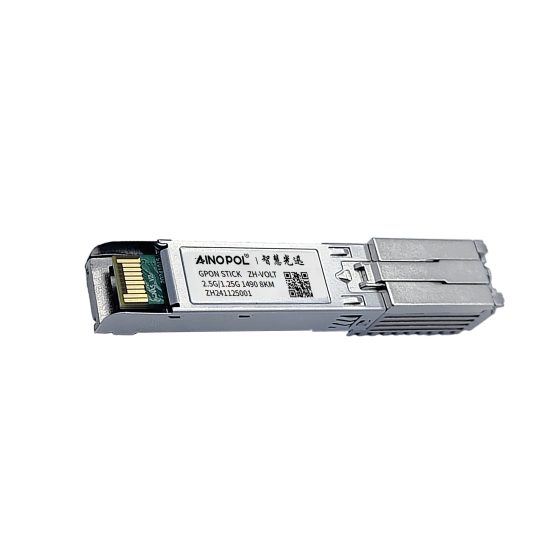
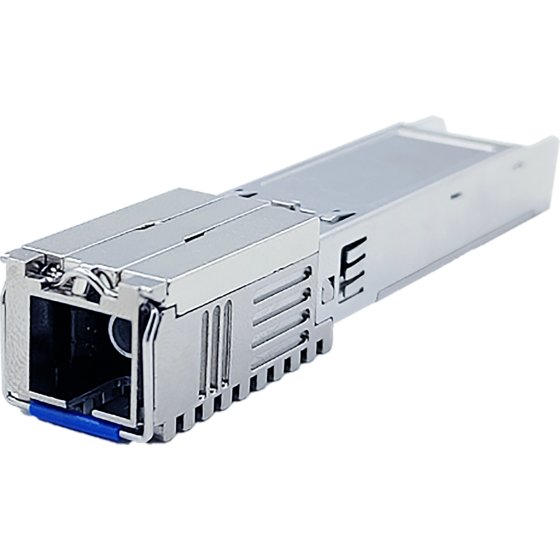
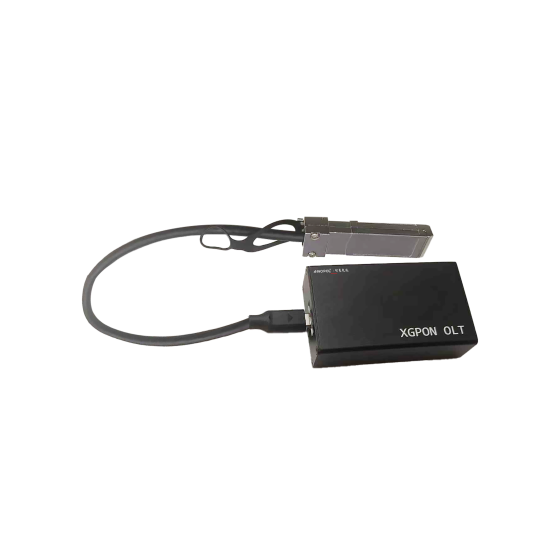
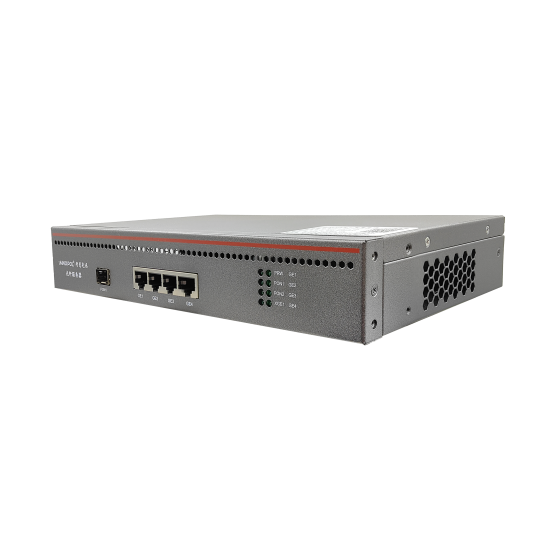
Fewer devices means fewer earth points and fewer failure points, which is itself a surge-protection strategy. A few dozen subscribers are served by a single 32-port vOLT, with low draw, low heat and modest room requirements; a mid-size hotel or apartment block moves to 64 ports; anything past a hundred rooms, or heading toward a 10G uplink, wants XG-PON. Cutting the device count beats adding one more SPD in front of every box.
9. Eight Checks Before Storm Season
- Measure and record earth resistance: ≤ 5Ω at the room, ≤ 10Ω at the device
- Torque every bonding point, including trays, cabinets and fibre strength members
- Confirm all three SPD tiers show a healthy status window; log install and last replacement dates
- Sample signal SPDs for insertion loss — verify gigabit has not quietly become Fast Ethernet
- Fit signal SPDs at the entry of every outdoor AP, camera and CPE
- Run a ten-minute UPS discharge and record actual runtime against current load
- Test voice gateway and door-lock backup separately; never assume they share the protected circuit
- Stock spares on site: ONUs, adapters, SPD modules, earth clamps
10. The Cost of One Storm Season
A surge-killed ONU does not cost the price of an ONU. Add two hours of travel and site time, a complaint from the guest, and whatever goodwill gesture follows. Twelve units a year for three years is a line item nobody budgeted for.
Three-tier SPDs plus an earthing upgrade typically cost the equivalent of twenty to thirty ONUs, and cover every outlet in the building. The genuinely expensive item is the third cost: repeated visits that find nothing. Earth-potential faults survive three replacements, the engineer's hours disappear into them, and by then the customer is quietly evaluating another supplier.
So the question is not whether to do surge protection, but at which layer. In older buildings where a proper earth electrode is not feasible, the fallback is to route fibre and mains completely separately, consolidate active equipment into one location, and tier the backup power by service. None of those three requires civil works.
Conclusion
The promise of a PON is the passive middle: no power, no maintenance, nothing to strike. That promise only holds if both ends are done properly — the earth and power in the equipment room, and the device and its adapter in the room. Together those two ends are usually a few percent of project cost, and they decide how many tickets the Monday after the storm brings in. Bond the earth properly, treat SPDs as consumables, tier the runtime by service, and the glass in between will look after itself.
Contact Us
Designing power and protection for a PON project in a lightning-prone region or on an unstable grid? Talk to AINOPOL. We can review site size, earthing conditions and backup requirements together, and propose a power and protection configuration that matches the OLT and ONU models you already run.
- Email: zhenghui.xu@sczhgx.com
- WhatsApp: +86 17612849559
- Online store: shop.sczhgx.com